A SLEEPLESS STORY
People's sleep needs vary. However, it is scientifically proven that an adult needs an average of 7,5 hours of sleep. One insomniac shares his experience with a sleep study.
PRELIMINARY STORY, OR IN THE SAME CLUB WITH THATCHER AND MADONNA
I have always slept little. And I took it as a positive fact that I have several hours more time in a day than others. Margaret Thatcher, Winston Churchill and Madonna supposedly only slept four hours in their heydays! Not that I could do even a millionth of what they did with my extra waking hours… Anyway, I think being awake is awesome and I was hoping that the need for sleep would decrease even more with age. Unfortunately, instead of four hours, I have started sleeping five, and if I have time and there are no stresses, sometimes even six hours. Still, I am quite tired during the day sometimes. And lately I have done scientific research In the field of sleep, experts tend to unequivocally confirm that an adult still needs 7-8 hours of sleep, so that all the most delicate functions in our body work as they should and we enjoy our lives as high-quality and for as long as possible. So the thought had quietly but surely crept into my head that maybe I should have my sleep examined.
SLEEP RESEARCH
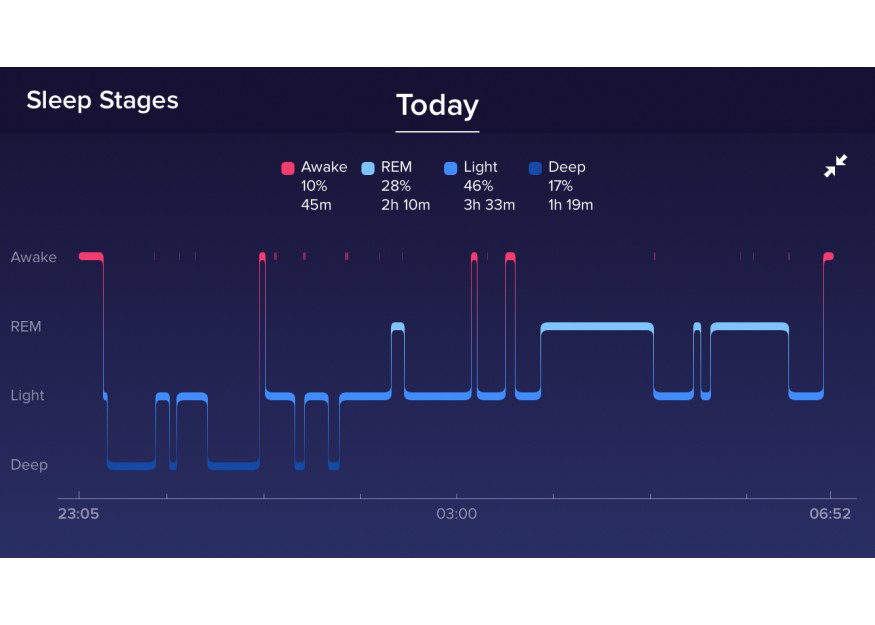
My dream was studied 4 Clinic To study sleep, you need to spend one night in a sleep center, accompanied by about twenty sensors and wires attached to your body and head. To start, you also have to fill out questionnaires about sleep disorders and emotional well-being. It's like seriously looking in the mirror - when I've honestly written down data on stress, blood pressure, wine and exercise, it's clear that almost everything is too little or too much and still on the wrong end of the scale. A few hours before falling asleep should be spent free of smart devices, and that's what I try to do. The sensors record me falling asleep at 1:11 a.m., apparently it's so early from pure inactivity and boredom.
The night seems surprisingly peaceful and suitable for sleeping, despite the sensors sticking out of my nose, the wires coiling like snakes around my legs, and the heavy rain drumming on the roof. And so I sleep a good five and a half hours and am as alert as a puppy for a new day.
WHY DON'T WE SLEEP WELL?
Next, we will meet with somnologist and psychiatrist Tuuliki Hion in a while, with whom we will discuss the causes of insomnia, which can be helped with treatment. My results will also be translated and interpreted.
Let's start with the most common factor that causes sleep loss: stress. Once stress has caused insomnia, it can become a permanent problem, with the body learning a pattern and waking up right at bedtime. In the worst case scenario, insomnia can persist for years, even after the stress itself is no longer present.
High blood pressure, sweating, nasal congestion, and going to the bathroom more than once a night can be signs of sleep apnea, which is also a very common cause of insomnia. Sleep apnea is a condition in which the throat collapses, causing the body to wake up. For example, if sleep apnea occurs during REM sleep, when we remember dreams better, then even though the cause is actually physical, people feel like a nightmare is the reason for waking up.
One of the major sleep disturbances is restless legs syndrome. Restless legs syndrome is a sleep-related periodic limb movement disorder, a common sleep disorder that, like sleep apnea, can be alleviated with treatment.
DOCUMENTARY AND DIAGNOSIS
After reviewing the causes of insomnia, my doctor and I will watch a video of my sleep. I must admit that I have seen more exciting movies than a black and white film about a person sleeping in a dark room, but with the help of Dr. Hion and the graphs running alongside, things become quite meaningful and interesting. First, we will analyze breathing. From this film, it turns out that the female lead is sleeping quietly and there is no snoring. However, the doctor knows that breathing is disturbed - this is checked by the oxygen content of the blood. The ideal is 96% oxygen saturation, but a change of 3% or more is considered a respiratory disorder. I have some dips of 5-6%, or breathing pauses, which also make my pulse and blood pressure play a little, but since the average for the night is 95%, or close to ideal, this should not be a big problem for me at the moment. My reading is still above the maximum normal index of 5 for respiratory disorder.
You can also see limb movements, where the body is looking for a way out of the breathing disorder. But it's immediately clear that I also have an independent limb movement disorder, I move myself every few tens of seconds. According to the doctor, this may be one of the reasons for my nighttime awakenings and daytime fatigue, especially since it increases both my heart rate and blood pressure. The norm for the hourly index of periodic limb movements is up to 5, but mine is 23.
In summary, the doctor assesses my sleep results as a combined problem, because both the breathing disorder and the limb movements could be addressed. However, since the latter is very much above normal, I am initially prescribed a one-month trial of treatment. The active ingredients of the medication are the same as those used to treat restless legs in milder cases and Parkinson's disease in more severe cases. According to Doctor Hion, after a month, you can usually see whether your sleep quality and daytime well-being are improving significantly. If not, you need to think again together about whether another medication could help or whether you need to work on another symptom. Cognitive behavioral therapy for insomnia can be used for all insomniacs, whether they have breathing and movement disorders or not. There are always good solutions and expert advice to combat insomnia!
Egle Haidak